The Castle and its rooms
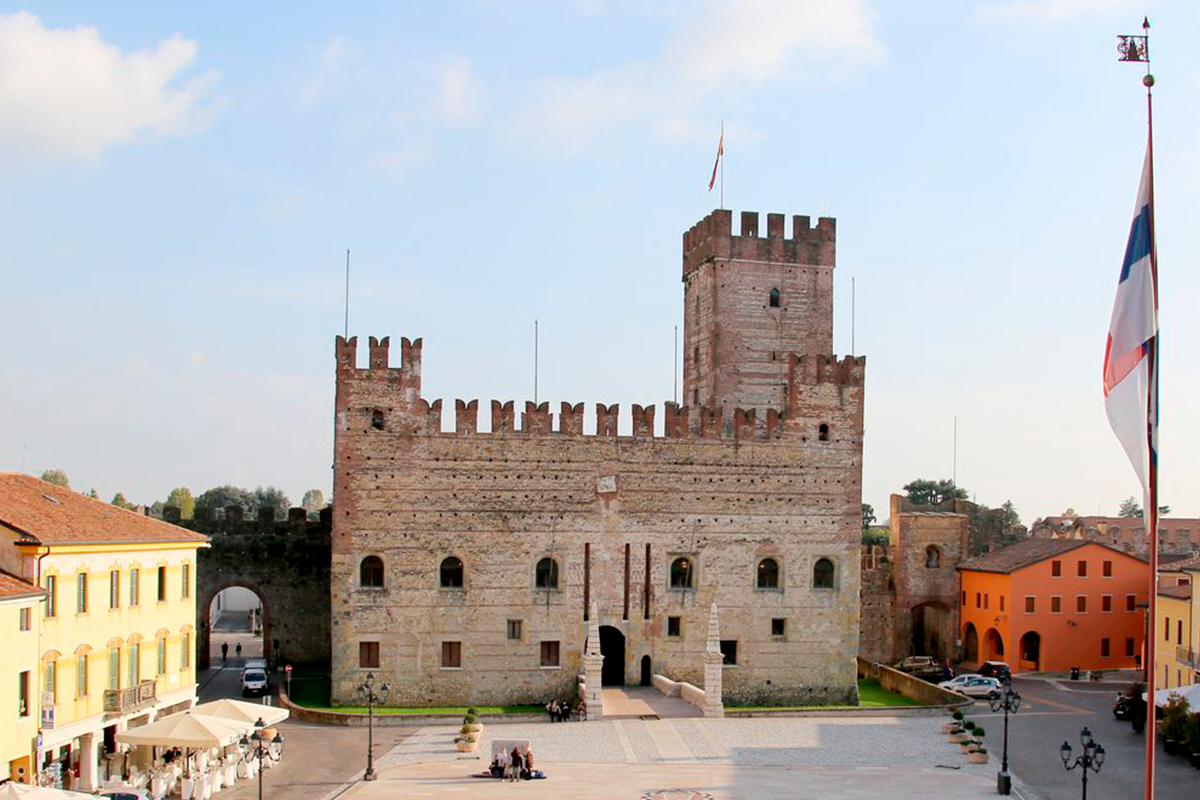
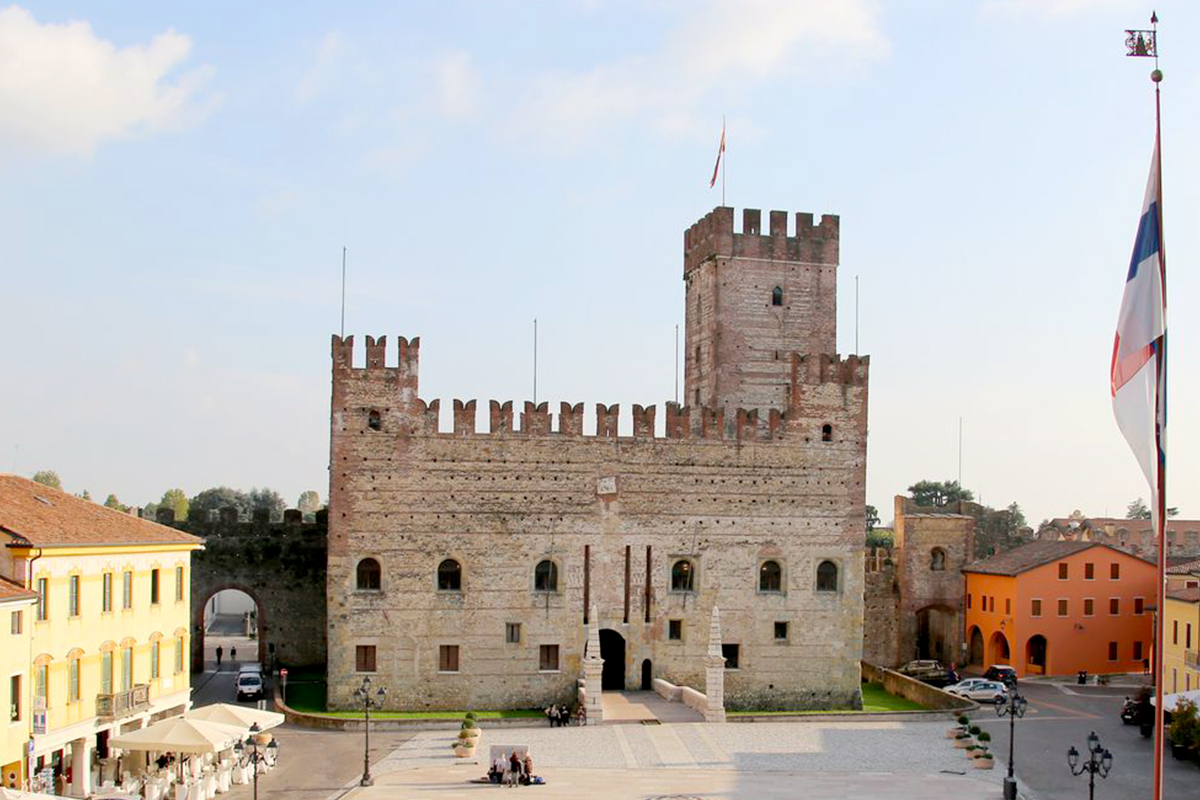
The Lower Castle of Marostica is a splendid example of medieval military architecture
Ground Floor
The visit to the castle begins by crossing the stone bridge that replaced the old drawbridge, built over the moat which is said to have been inhabited by a crocodile brought in the 16th century by the Marostica native Prospero Alpini (a doctor and traveler). The stuffed crocodile is now preserved in the historic pharmacy located in Piazza Castello.
Entering through the studded door dating back to the 17th century, visitors first access the Defense Chamber, where on the left wall there is a fragment of a fresco (sinopia) depicting the siege of a castle, and on the opposite wall, a bronze bas-relief by Gigi Carron titled “Marostica City of Culture”. To the right are two rooms that today house the Pro Marostica Association and the Tourist Information Office.
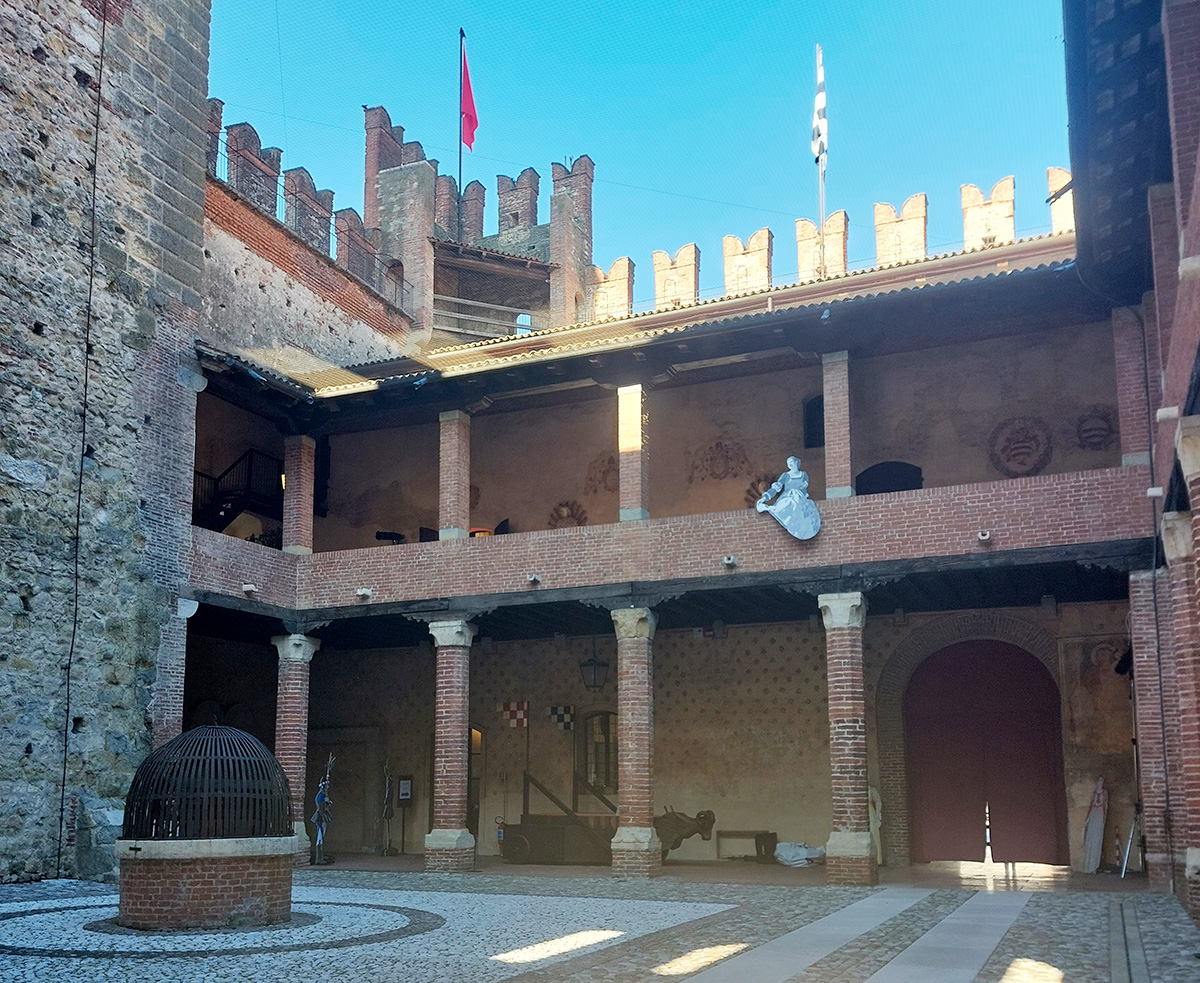
Next, you enter the Courtyard, surrounded by a loggia of brick pillars, overlooking the rooms once used for the castle’s service activities (stables, kitchen, storage, etc.), now home to the International Chess Museum.
The Great Hall is decorated near the ceiling with a band displaying the coats of arms of resident cities and features a sculptural group, by Luigi Ferrari (1884), depicting Doge Francesco Foscari kneeling before the Lion of Saint Mark.
Returning to the Northern Loggia, the walls display frescoes of St. Anthony the Abbot blessing and St. Christopher carrying the Child Jesus on his shoulder (14th century). Among the floral decorations on the northern walls, you can still see some architectural elements from the Church of St. Sebastian (15th century), now in ruins: a bifora window and a portal with an inscription. On the eastern portico walls, a fresco fragment shows a boat recalling the diversion of the Brenta River by the Visconti family.
At the center of the courtyard stands a 15th-century Well made of Asiago stone, and nearby a plaque on the keep commemorates four partisans killed by the Nazis in 1944.
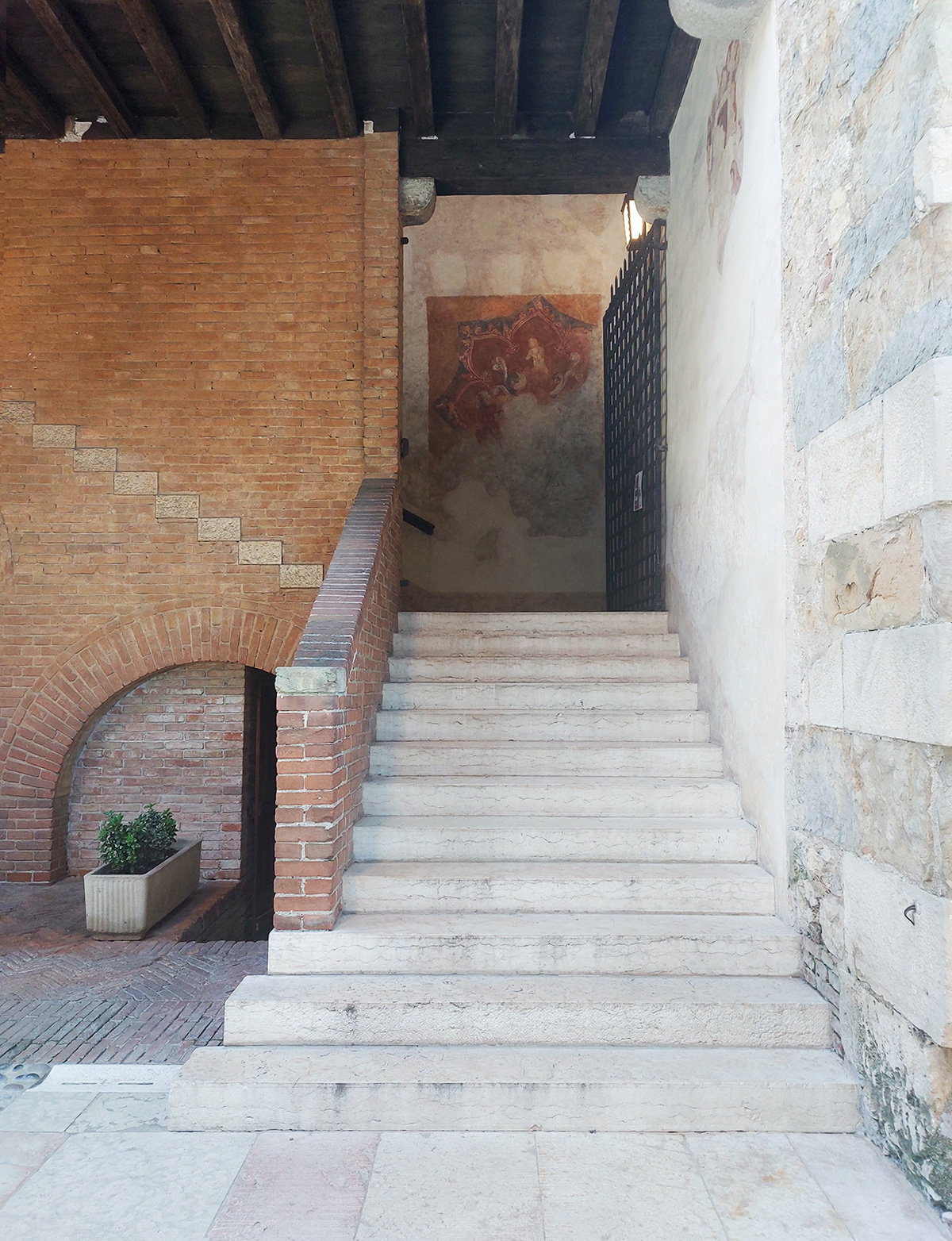
The staircase to the south leads to the First Floor, from where you can access the Keep, the Attic, and higher up, the Castle’s Walkway.
First Floor
Upon reaching the first floor, visitors enter the following rooms:
Council Hall: for centuries the seat of Venetian power, it features on the right northern wall a carved wooden choir from the Church of St. Roch (16th century). The walls are decorated with 14th-century floral hangings, while on the left hang two large late Renaissance noble coats of arms. On the eastern wall, high up, a Latin inscription suggests the existence of a chapel commissioned by the podestà Nadal (1666). Near the large stained-glass window, made of over 150 leaded pieces, stood the altar.
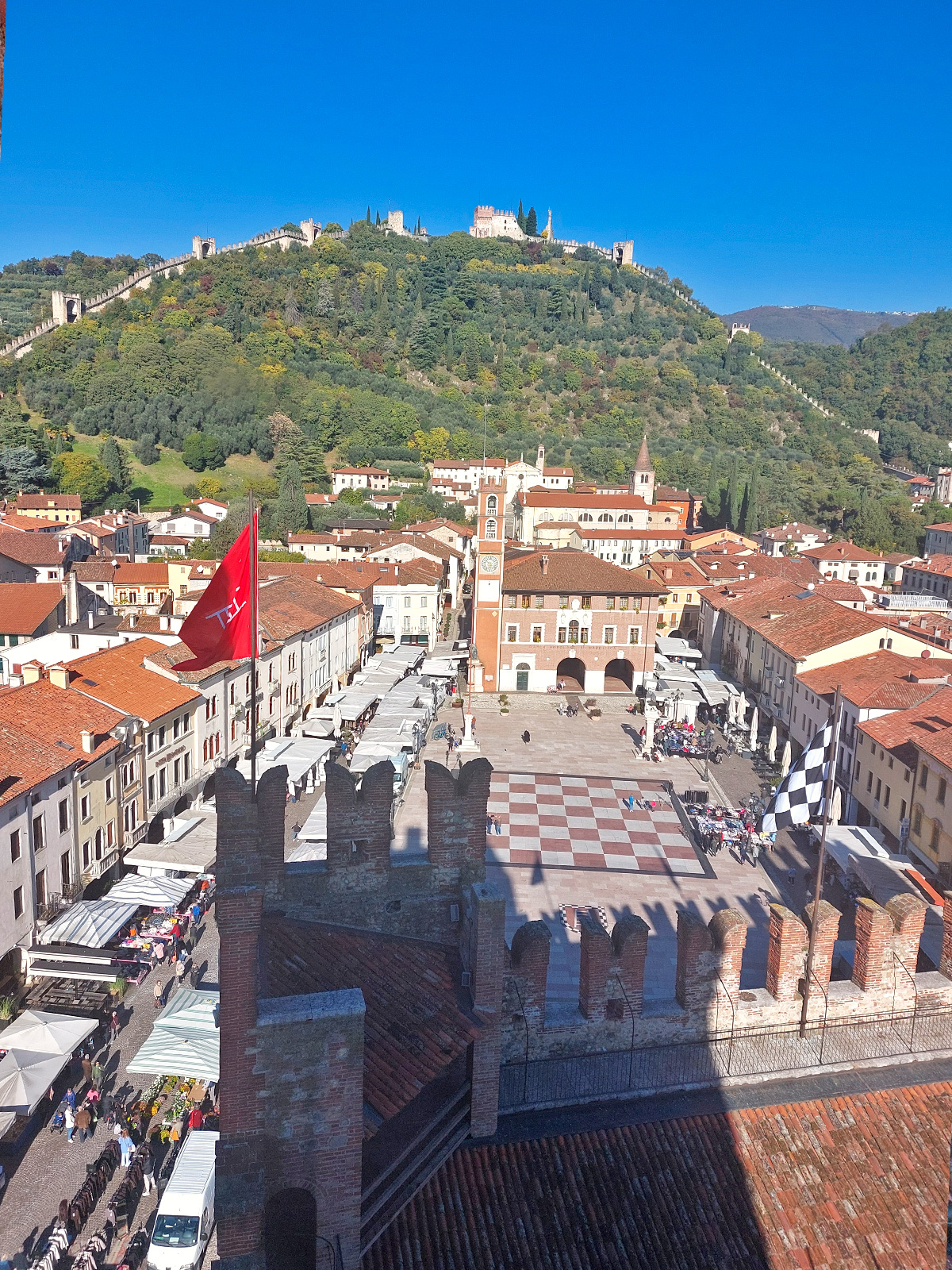
The following rooms host the permanent exhibition of costumes from the Chess Game, an exquisite collection of garments perfectly reproducing the clothing worn at the end of the 15th century, along with some period musical instruments. The first edition of the live Chess Game took place in 1923, organized by the Student Association under the guidance of chemistry student Francesco Pozza. The event, held in Piazza Umberto I (now Piazza Castello), was a great success but was not repeated due to wartime events. After the war, in 1954, the square was restored, and in memory of the 1923 game, a large white and red marble chessboard was installed on the pavement. Meanwhile, a Committee was formed to revive the live Chess Game, entrusting artist, architect, and director Mirko Vucetich with the theatrical direction. The Game took place on September 12, 1954, and has been held every two years in September since then.
Anteroom: used as a waiting room until the 19th century. At its center is displayed a precious porcelain and gold chessboard from the 1880s, made by Luigi Serafin. The wall panels feature quotes and phrases from the Chess Game performance. The floor is terracotta, and along the ceiling perimeter a chess-patterned molding reproduces a war banner.
Hall of Honor: residence of the podestà, notable for its large fireplace and the fresco of the Madonna and Child attributed to Bartolomeo Montagna. Silhouettes of podestà Taddeo Parisio and his daughter Lionora, life-size cardboard costumes of the herald, the master of ceremonies, and two noblemen, sketches of actors, and costumes of the clarion and drum players are displayed.
Pretura Hall: seat of the Venetian Pretura and, from 1850, also Austrian. It now houses objects related to the Chess Game and tells the story of the show’s beginnings: D’Annunzio’s 1923 flyover of the square and the installation of the chessboard on the Venetian “liston” in 1954. On the right are the directors of the Chess Game; in the center, mannequins dressed in the director’s stage costume and the field master’s armor.
Podestarile Hall: the private residence of the podestà during the Venetian era, later the seat of local Austrian power and military and civil offices during the Kingdom of Italy. Historical maps adorn the walls along with coats of arms of Venetian podestàs, and a fresco of the Madonna enthroned with Saints Sebastian and Roch, to whom the 15th-century Franciscan and Dominican convents in Marostica were dedicated. On the northern wall, the fireplace was restored in the 1930s.
Today, the hall is entirely dedicated to the stage costumes of the protagonists and characters of the Chess Game and related props. Panels on the walls display script excerpts, original drawings, and travel photos. Prudenzia and Oldrada close the exhibition outside.
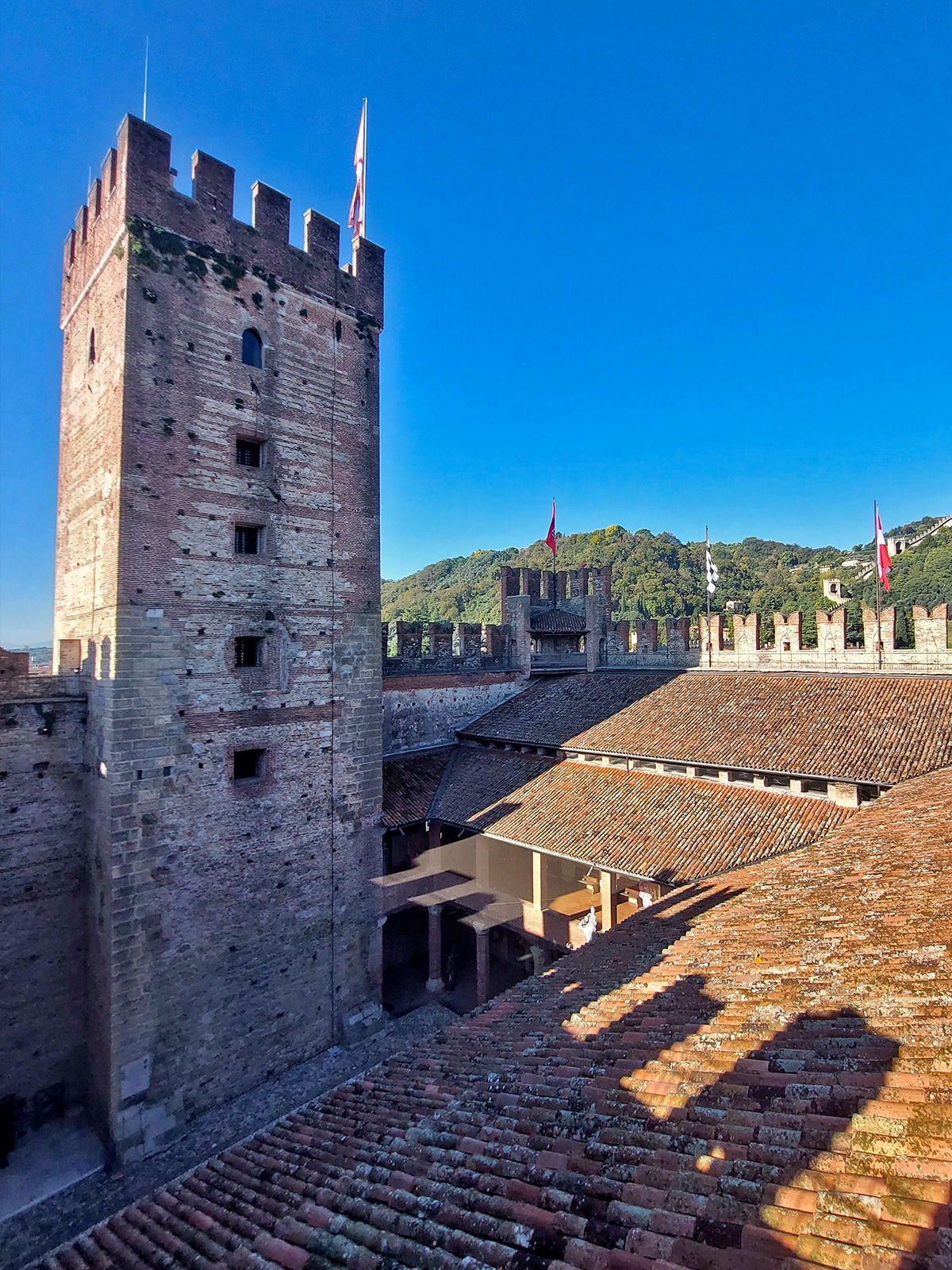
At the end of the portico, the stairs on the left lead up to the Keep, the imposing castle tower built for defense, developed over 7 floors, measuring 10 meters per side and 34 meters high. It was once used as the pretorial prison and later as a district jail. At the top floor of the keep, there is an original 14th-century toilet known as the "acquaio." Four pointed-arch windows, positioned on the four cardinal points, illuminate the room. From here, visitors can enjoy a 360° panoramic view.
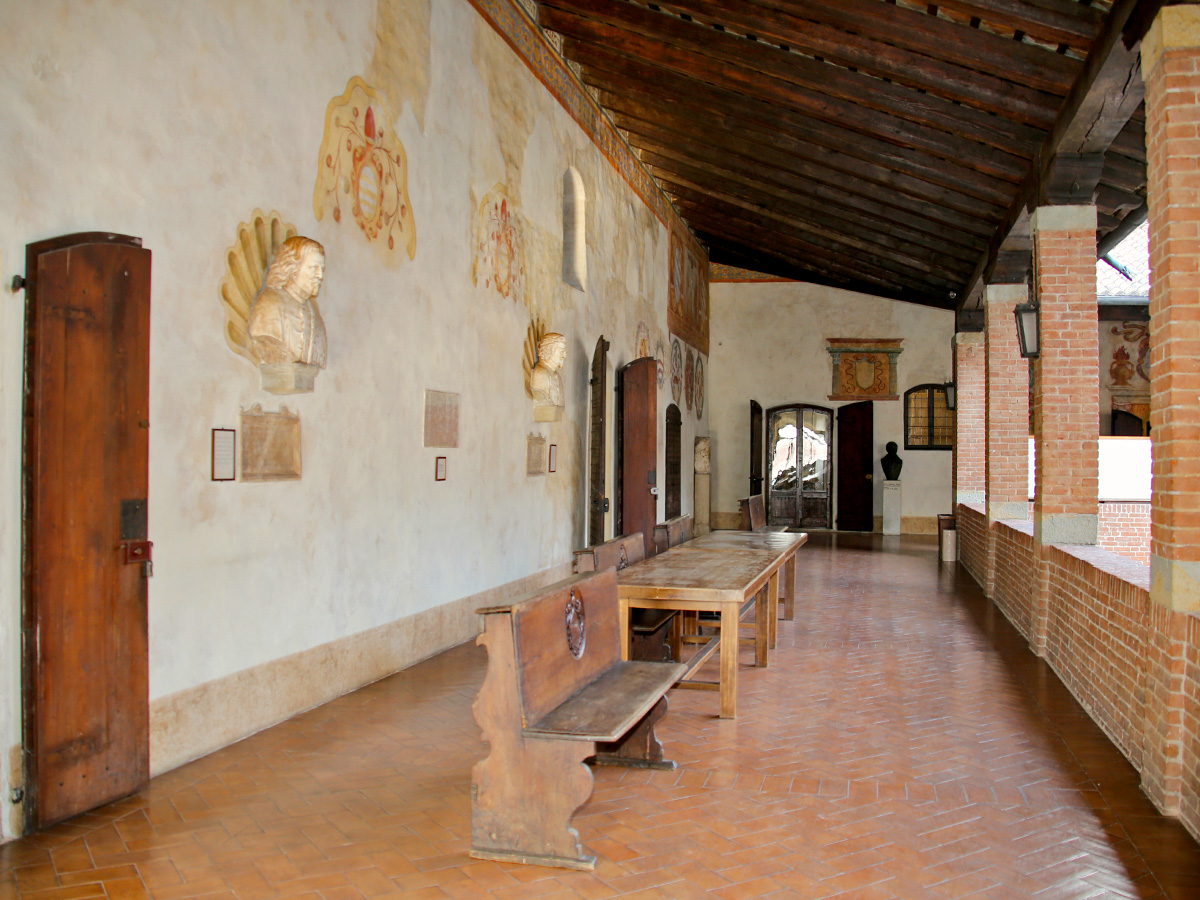
The Northern Loggia
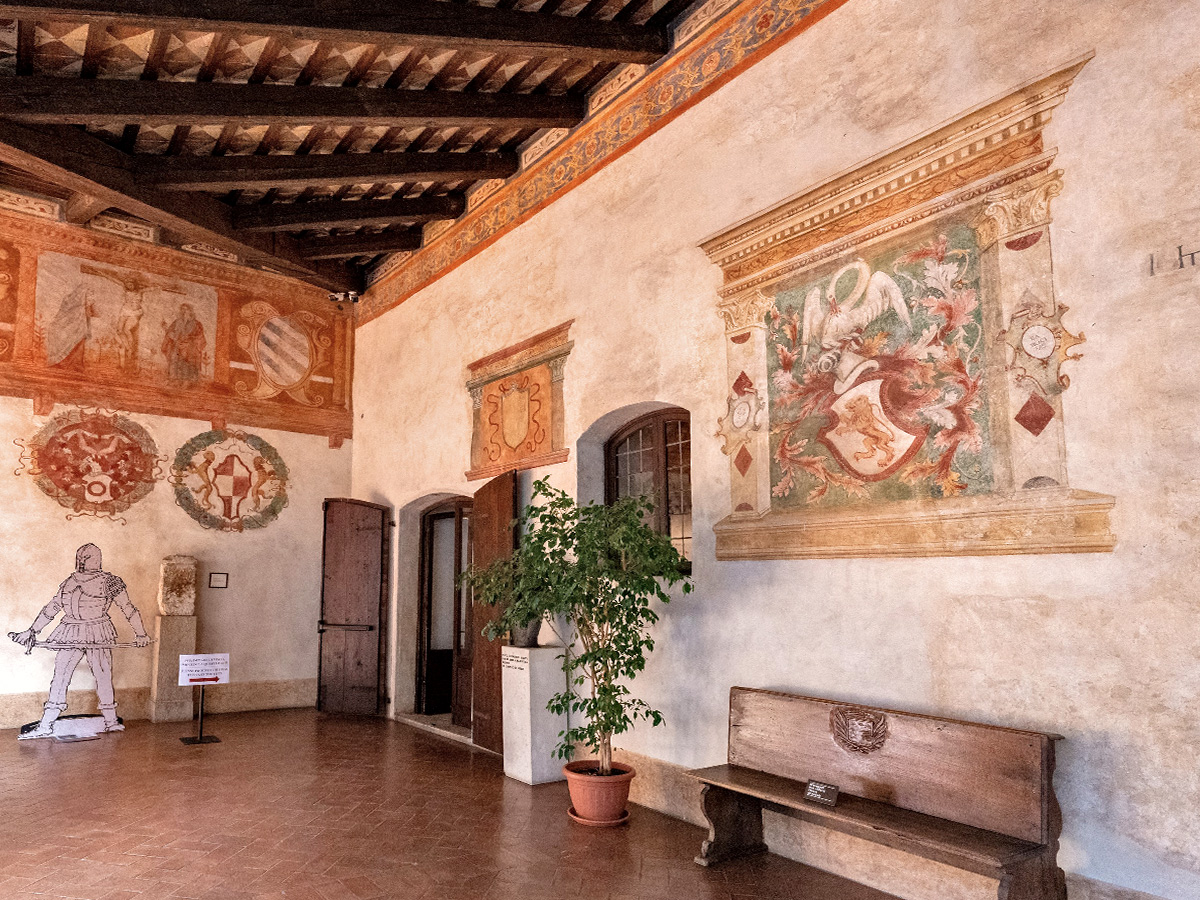
Here stands the bust of the Venetian procurator Giovanni Pisano, the podestà Antonio Donà, the procurator Angelo Emo, and coats of arms of noble Venetian families.
A marble block bears a votive inscription from the hamlet of Valle San Floriano, honoring the cult of Diana, confirming the rich vegetation of the area during Roman times.
The Eastern Loggia
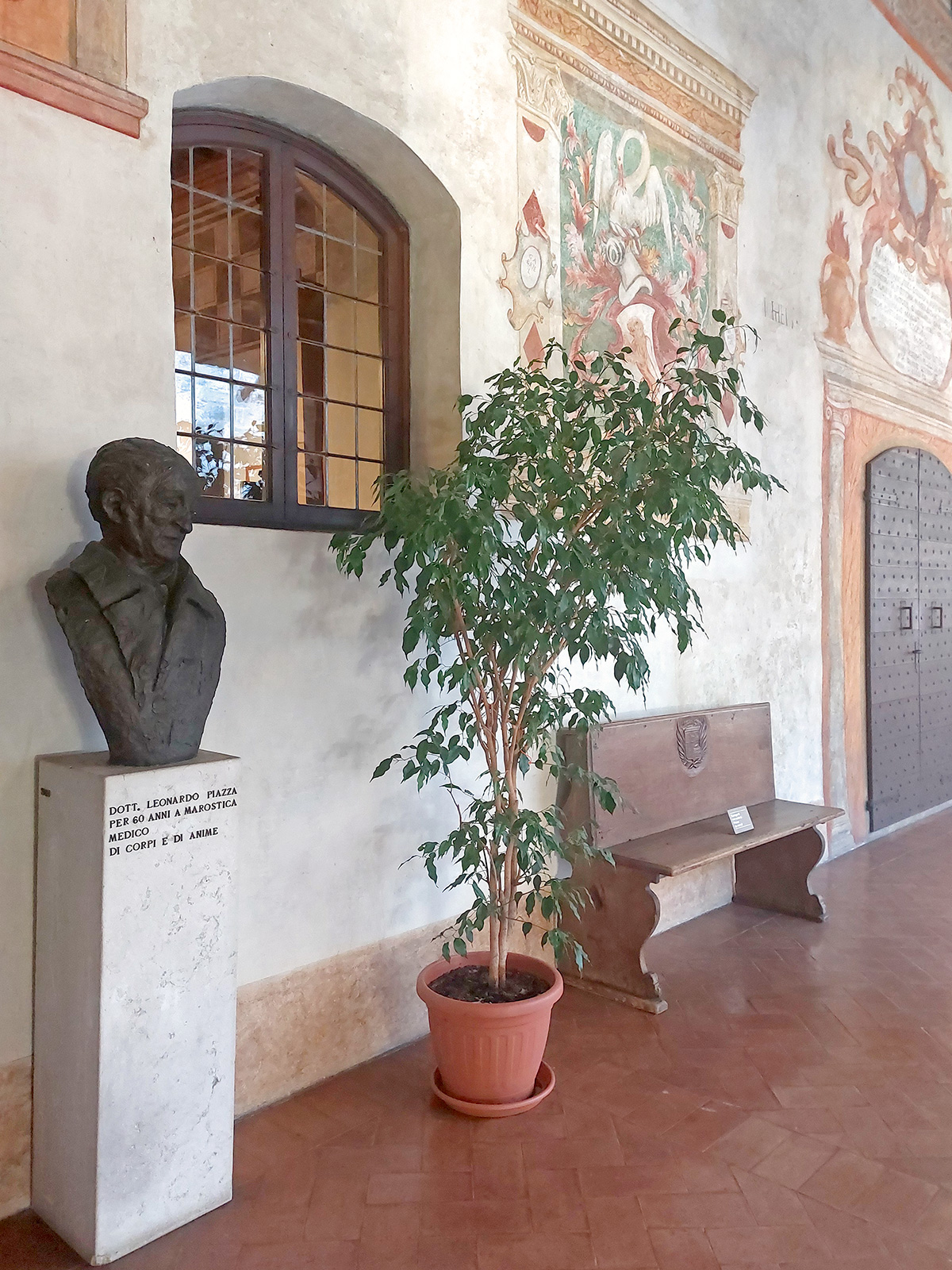
The noble coats of arms of the Venetian podestàs who governed Marostica between the 15th and 18th centuries continue here. Two stone busts are dedicated to the physician Piazza and the botanist Prospero Alpini, the first scholar of coffee. Finally, a musical cartouche conceals the rebus: "dopo mi chi temido? Doge ai" ("after me, you should fear the Doge").
A small shrine contains a tombstone slab of a member of the Della Tavola family.
Second Floor
Hall of Shields and Banners: Restored in 1934, this over 500-square-meter hall features 10 Italian-style trusses. It was used in the 16th and 17th centuries as a warehouse and lodging for service staff. Today, visitors can admire shields and banners used during the live Chess Game.
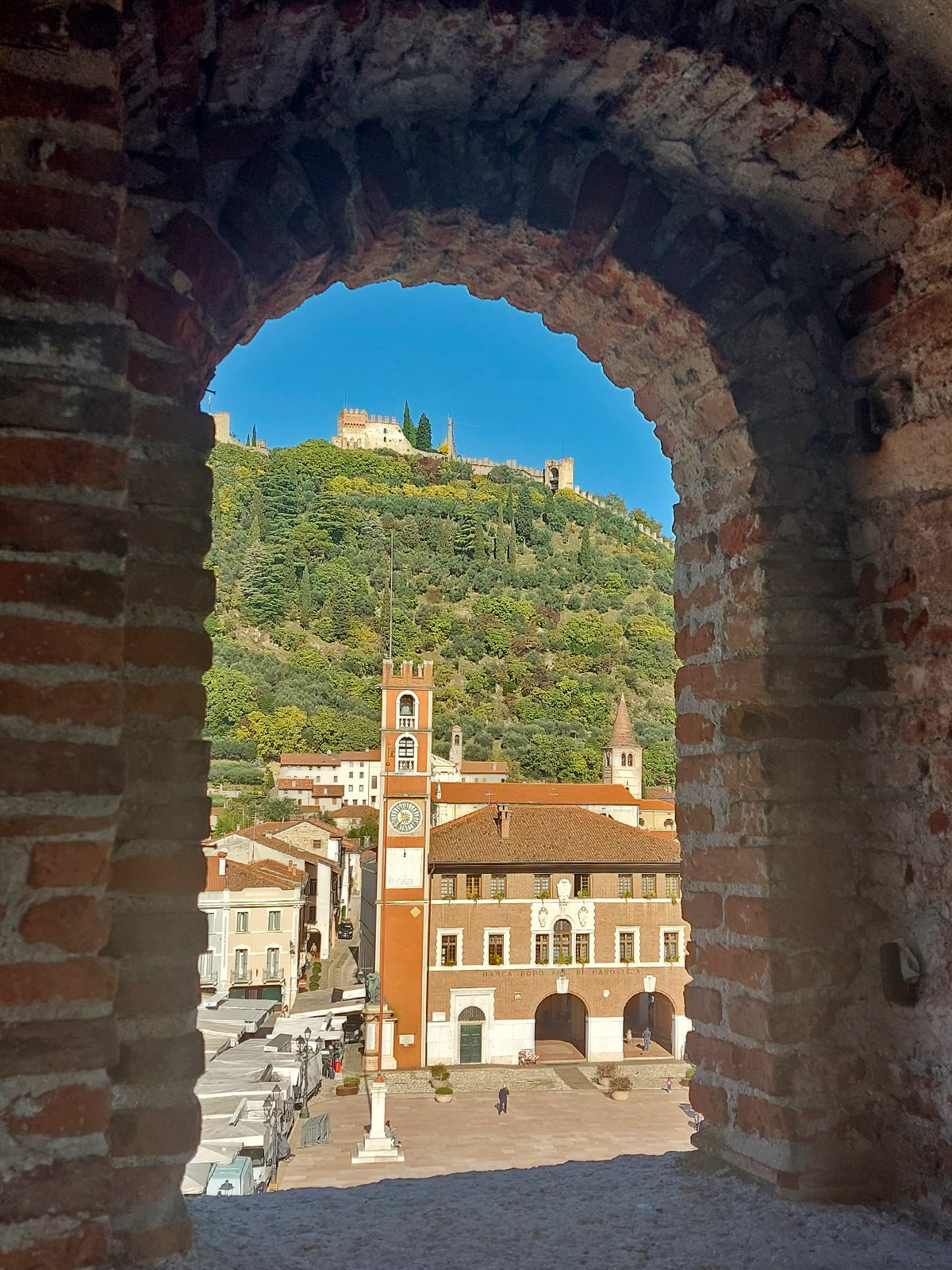
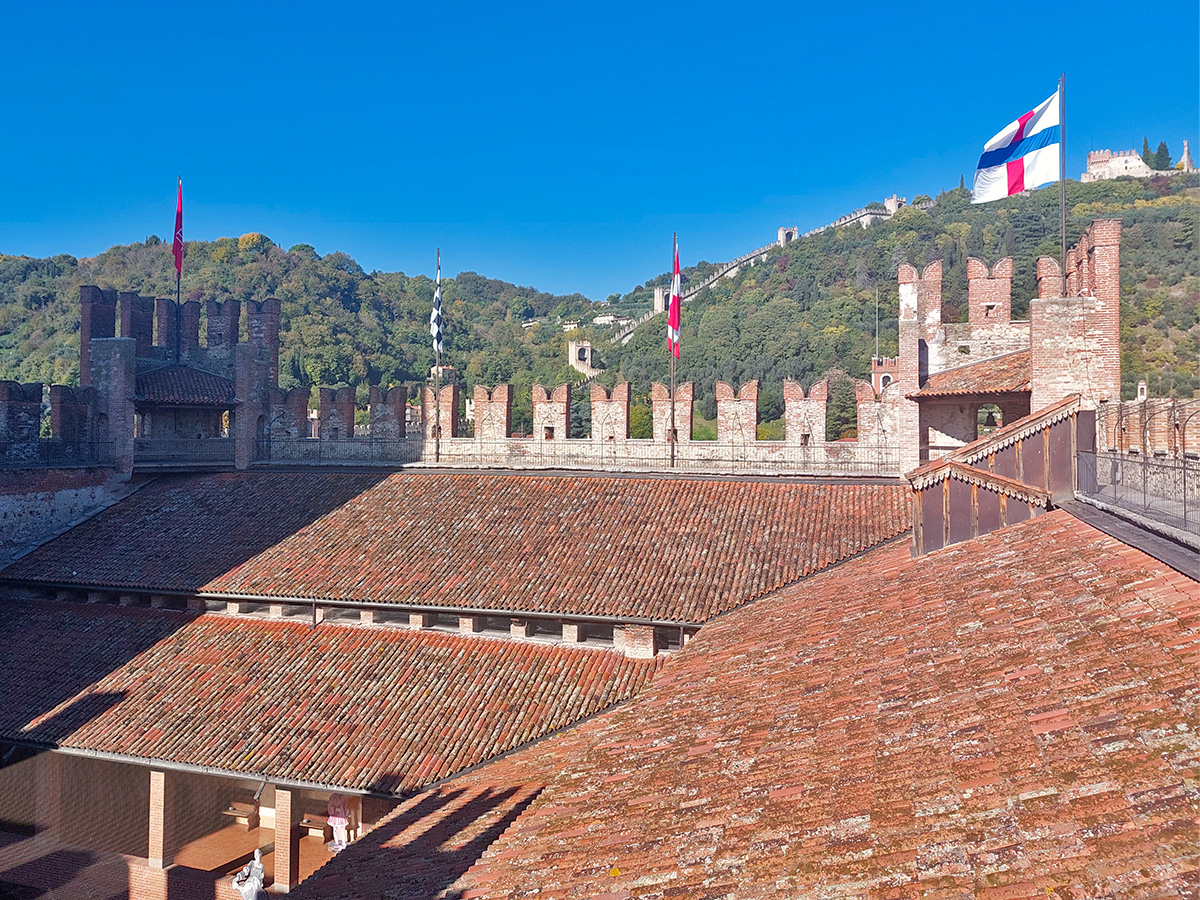
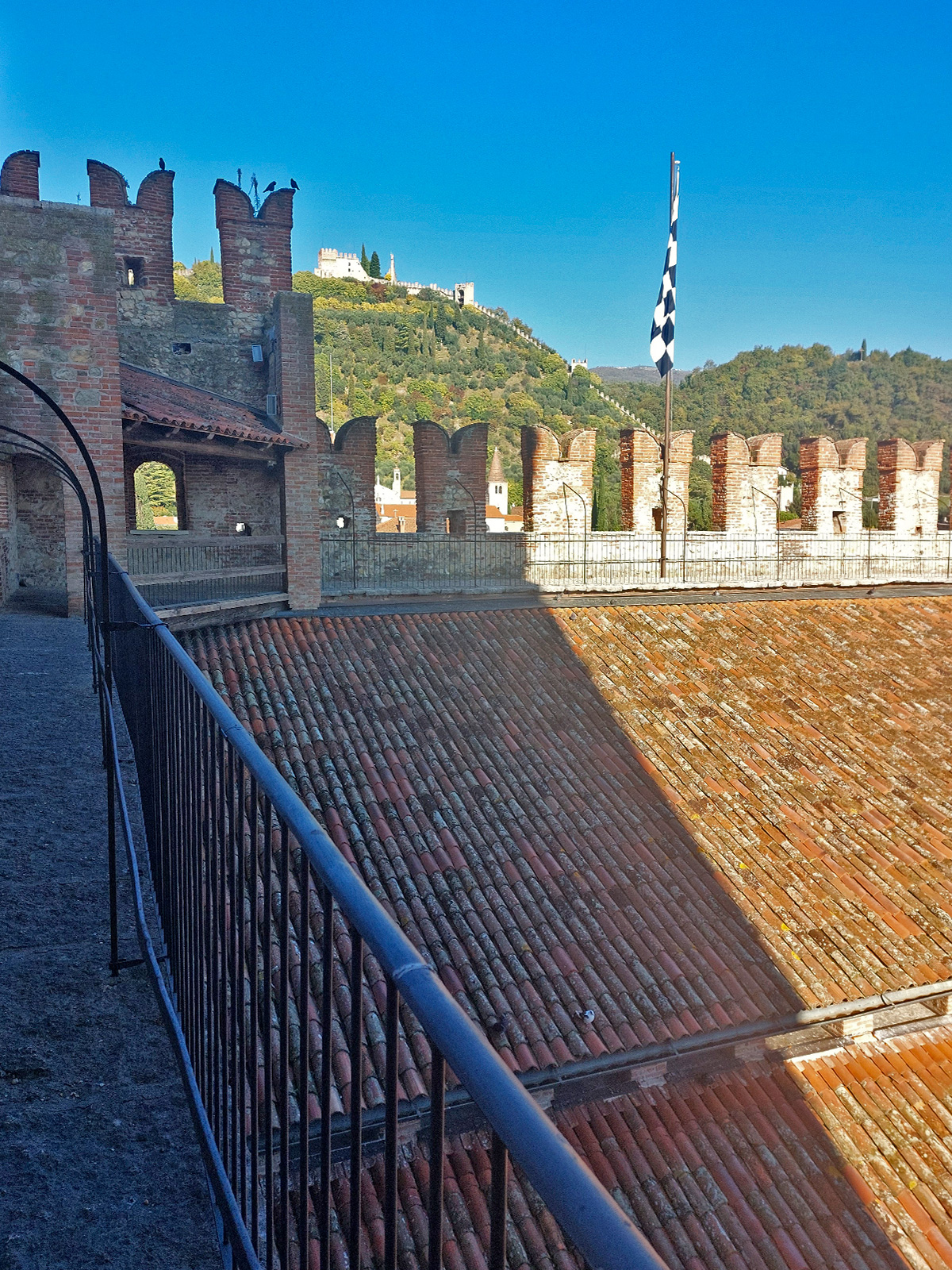
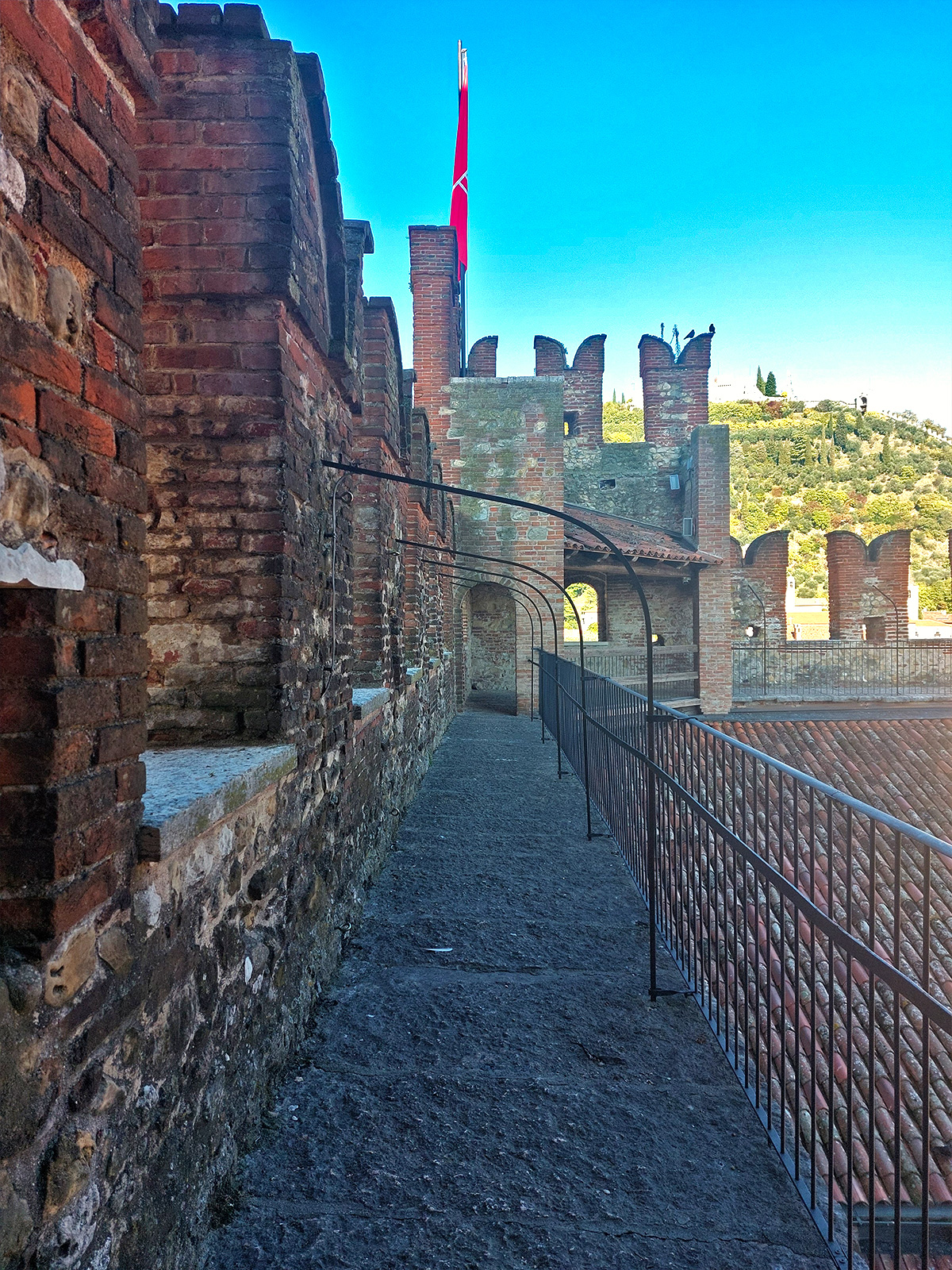
The Walkway: Bounded by parapets adorned with Ghibelline merlons to the north and Guelf merlons to the south. The walkway is situated 20 meters above ground, from here, you can admire the city, Piazza Castello, and the view of the Upper Castle from above.
At the four corners of the walkway stand four towers, and on the southern façade there is a bartizan, a defensive structure equipped with loopholes.
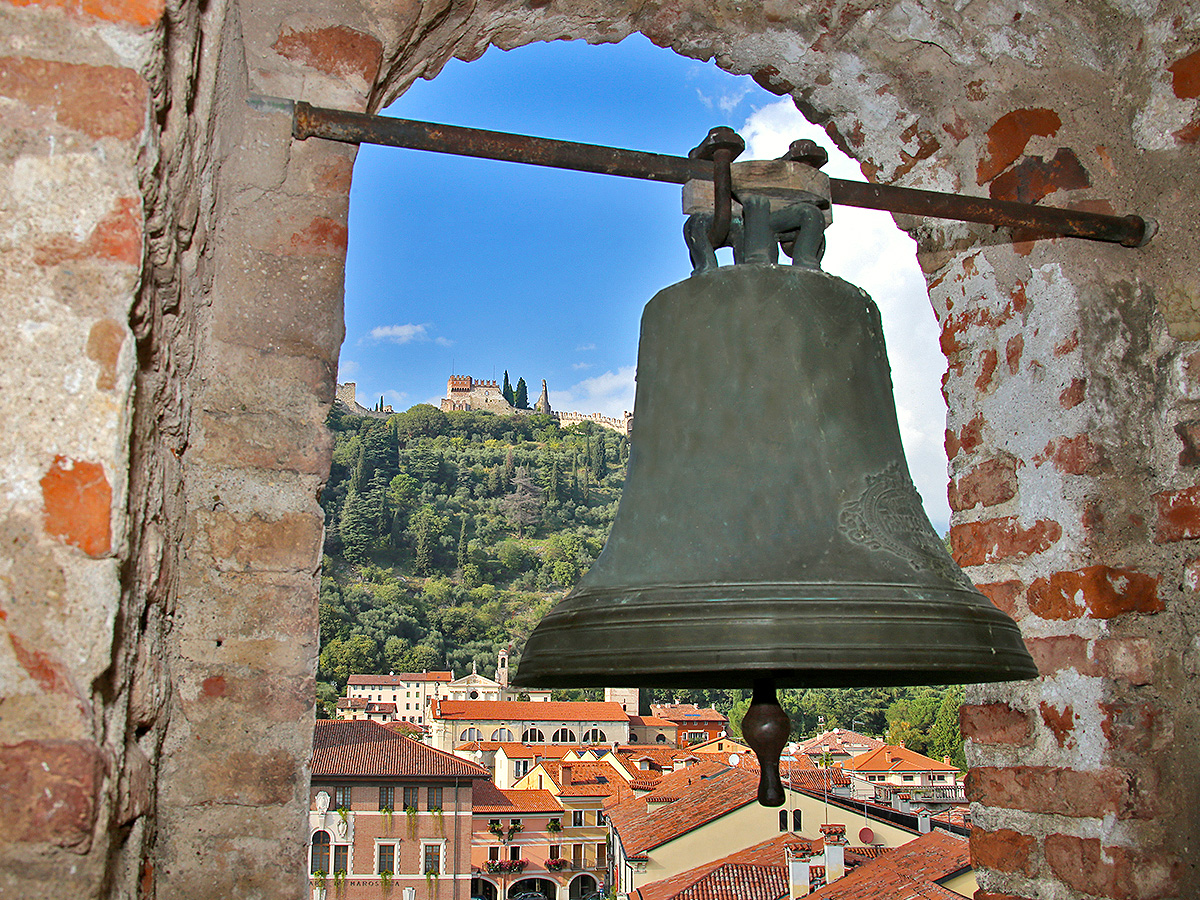
The ancient bell, still present today, once summoned the Council.