International Chess Museum
In the heart of the city of Marostica, the Lower Castle opens its doors to a captivating journey through history, art, and culture: the International Chess Museum, the largest chess museum in Italy.

The Museum
In the heart of the city of Marostica, the Lower Castle opens its doors to a fascinating journey through history, art, and culture: the International Chess Museum.
The museum’s rooms are located on the ground floor of the castle and house works from every continent: ancient and modern chessboards, unique pieces crafted from precious materials, refined artifacts, and artworks that tell the story of the world’s most universal game. The collection illustrates how chess has traversed eras and civilizations, becoming a symbol of strategy, creativity, and cultural dialogue.
The visit path guides you step by step through different rooms, each dedicated to a geographic area, showcasing the extraordinary variety of how chess has been interpreted around the world.
Whether you are an avid player, a scholar, or simply curious, the museum offers a unique, engaging, and evocative experience that combines the playful, artistic, and historical dimensions of chess.
Entrance Hall
Upon entering the entrance hall, your gaze is immediately drawn to the majestic Double Gambit chessboard, a collaboration between Armand Pierre Fernandez, known as Arman, and Georges Boisgontier. This iconic piece welcomes visitors and introduces the dialogue between art and play that characterizes the entire museum.
The hall also displays examples of vertical chessboards, including Asphalt Chess by contemporary artist Francesco Garbelli, who explores current themes such as ecology, mobility, perception, and the semiotics of signs.
Europe Room
The Europe Room is entirely dedicated to works and artifacts from the European continent, narrating the evolution of chess from its arrival from India in the 6th century AD as Chaturanga to the present day.
Inside the room, the Clock Space presents models illustrating the technological and artisanal evolution of chess timekeeping devices, from the elegant, documented creations of Hendrikus Koopman to the electronic clocks by Digital Games Technology, pioneers in digital innovation.
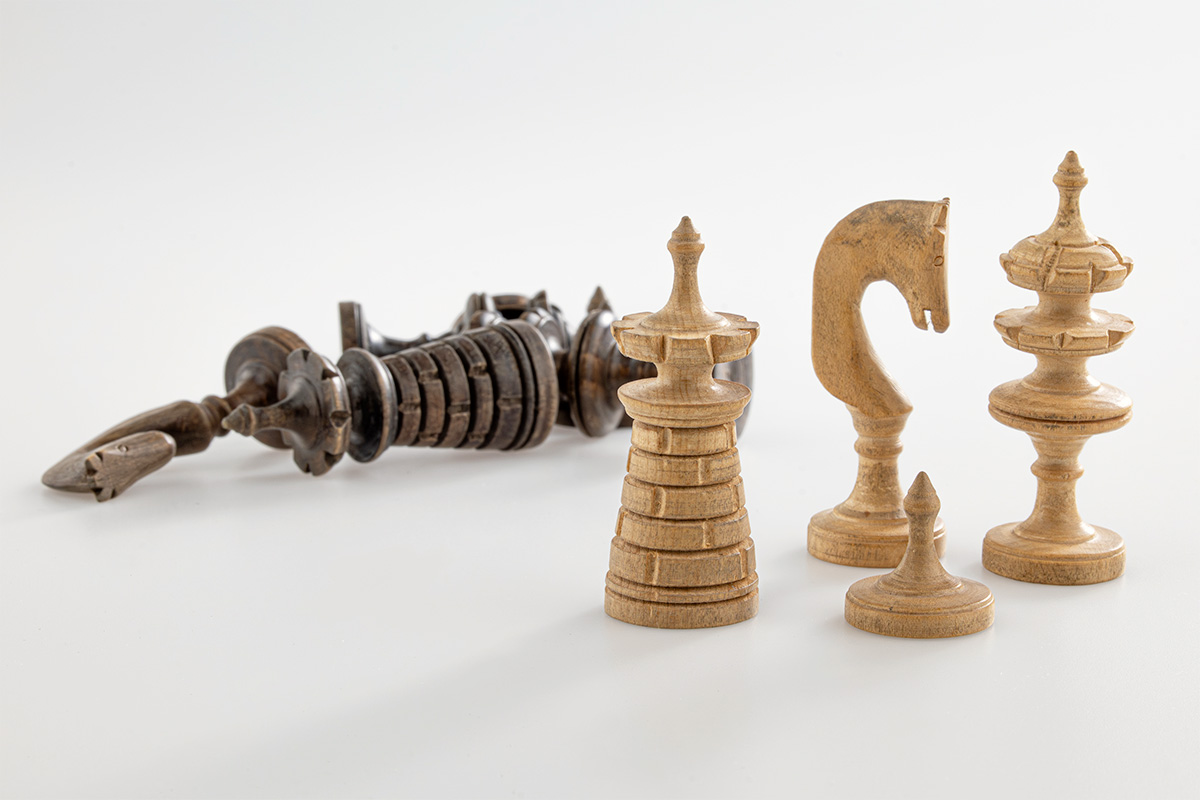
Between the late 15th and early 16th centuries, especially in Spain and Italy, modern chess rules were consolidated, creating the need to standardize chessboards and pieces. Among the museum’s models are the German Selenus set, a precursor to modern standard pieces; the French Régence, recognizable by its oval shape; and the English Staunton model, which defined the modern standard for international tournaments.
In the 18th century, chess spread more widely in society, aided by publishing and the emergence of new social spaces like cafés, turning the game into a social activity accessible to a broader public. From the United Kingdom came experiments focused on accessibility and innovation, such as In statu quo and Chess for the Blind, while the Russian section highlights chess’s role as a tool for propaganda and ideological communication, with works like Natalya Danko’s Communists versus Capitalists and Jeannine Hétreau’s Christians versus Moors.
The area dedicated to the International Chess Federation (FIDE) preserves symbols of recent history, including the champions’ tie and one of the chessboards from the Turin Olympics.
Artistically, the Europe Room hosts significant pieces such as the acrylic glass chessboard by Victor Vasarely, a French representative of Optical Art, and the Bauhaus Chess set by Joseph Hartwig, which introduced geometry, simplicity, and functionality in 20th-century Germany. The Italian section completes the European journey, showing how creativity, experimentation, and innovation continue to characterize chess production today, highlighting its artistic, cultural, and social relevance.
This space also features unique and experimental works, such as Giò Pomodoro’s set with stainless steel and marine bronze pieces, and Enrico Baj’s spectacular chessboard, where each piece assumes its own identity.
Finally, a special focus is dedicated to the city of Marostica, famous for its living chess tradition: among the local works, the chessboard attributed to the sculptor Toni Moretto stands out, a copy of which was gifted to King Baudouin I of Belgium on the occasion of the 1958 Brussels Expo.
America and Africa Room
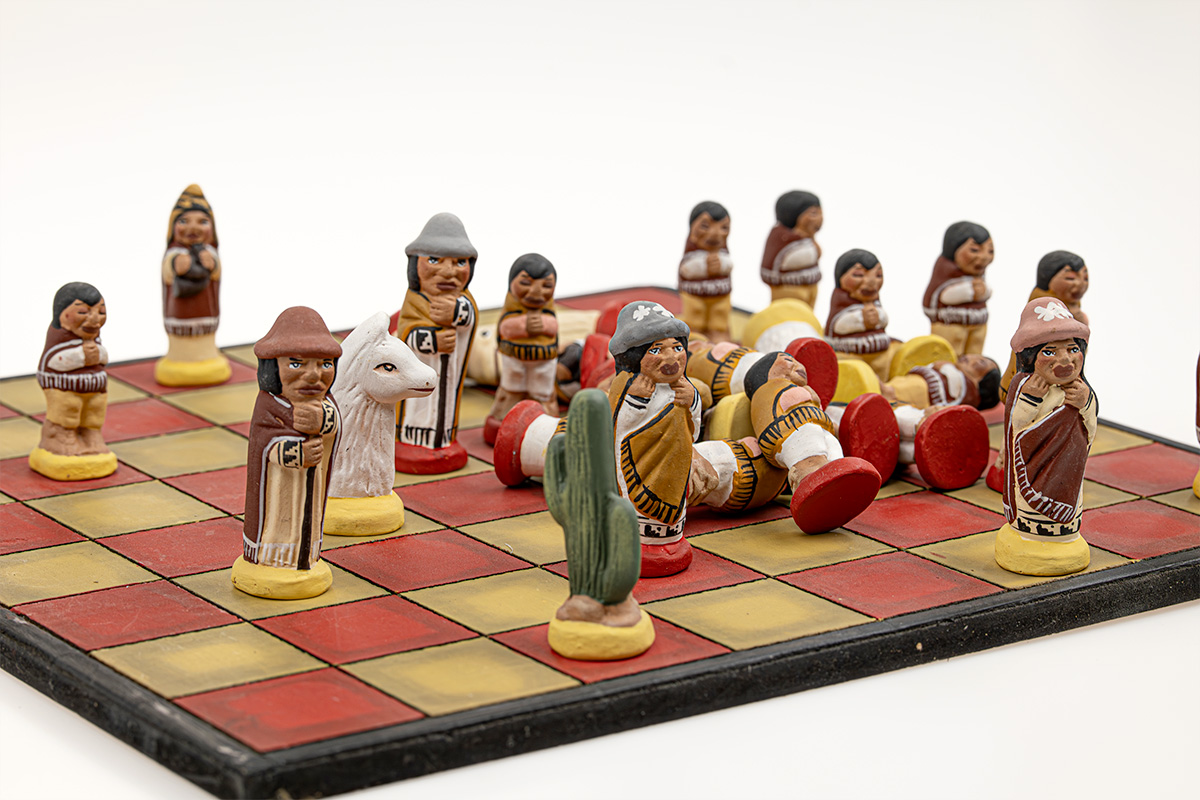
The America Room explores the diverse chess traditions of the continent, bringing together art, design, and culture. This section introduces the international context of the game, highlighting connections between West and East and America’s role in the contemporary evolution of chess.
Graphic works by Andreas Paul Weber present his visionary world, addressing political and moral themes through the metaphor of the game. Alongside these, Max Ernst and Man Ray contribute surrealist and symbolic perspectives, opening new views on the relationship between art and play.
A significant space is dedicated to Marcel Duchamp, a key figure in the dialogue between art and chess. Exhibits include graphic works, photographs, and historical documents.
The journey continues with chess sets focused on design and experimentation, featuring works by Austin E. Cox and F. Lanier Graham, leading up to the more pop and contemporary interpretations of Keith Haring and Karim Rashid, where the game merges with the language of color, form, and visual communication.
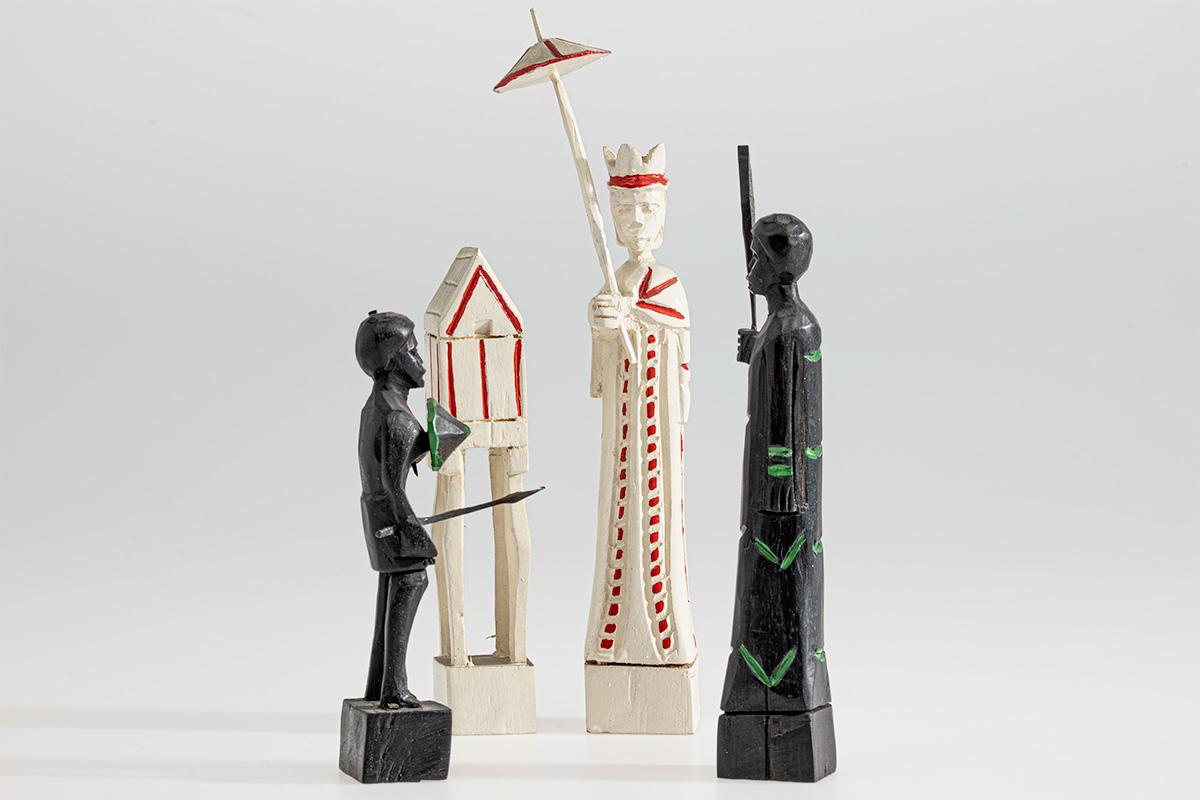
The section dedicated to Africa highlights the richness and diversity of the continent’s chess and artistic traditions, where the game becomes an expression of culture, identity, and collective creativity. Makondè sculptures, along with sets from Congo, Kenya, Rhodesia, and Madagascar, show how chess has been reinterpreted through materials, shapes, and symbols connected to nature and everyday life. Works dedicated to African wildlife and local figurative art reflect the union of art and spirituality.
Asia Room
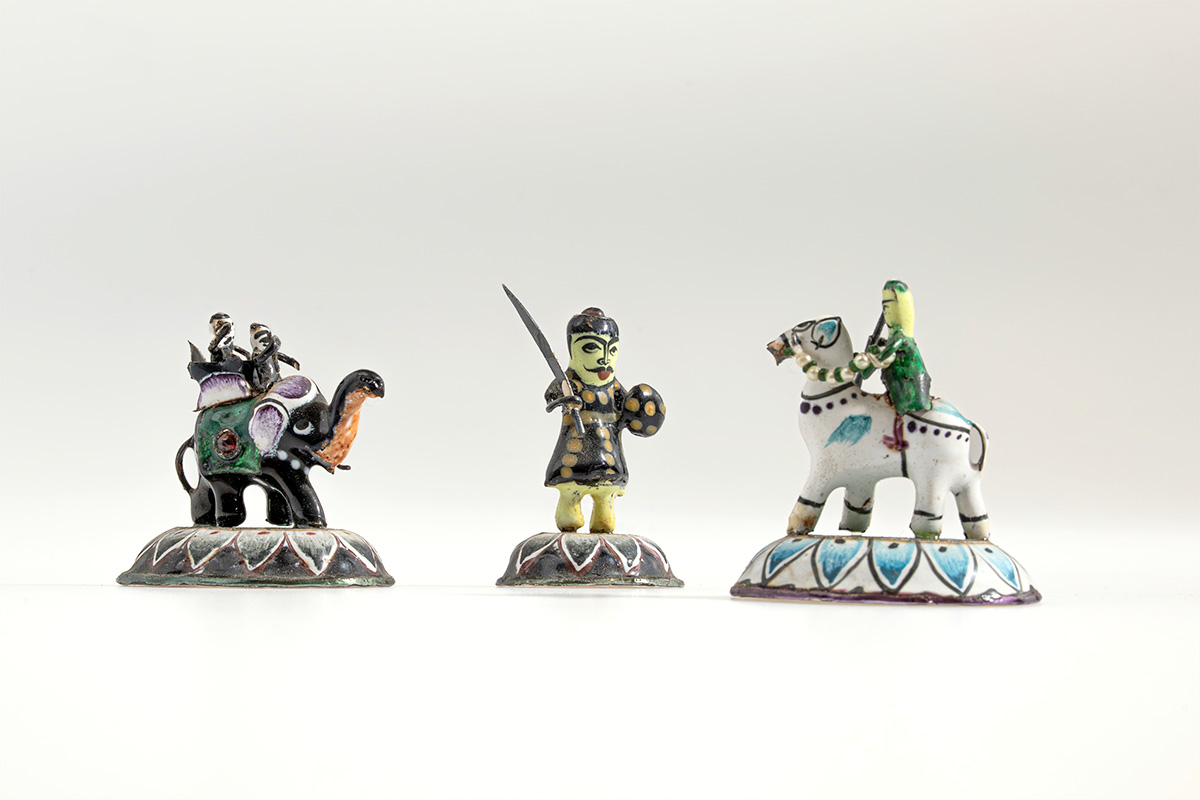
The Asia Room takes visitors on a fascinating journey through the richness and variety of the continent’s chess traditions, where the game becomes simultaneously art, symbol, and universal language. The path highlights artistic, historical, and conceptual experiments, showing how chess evolved into different forms, from minimalist and abstract representations to variants typical of Chinese and Japanese culture.
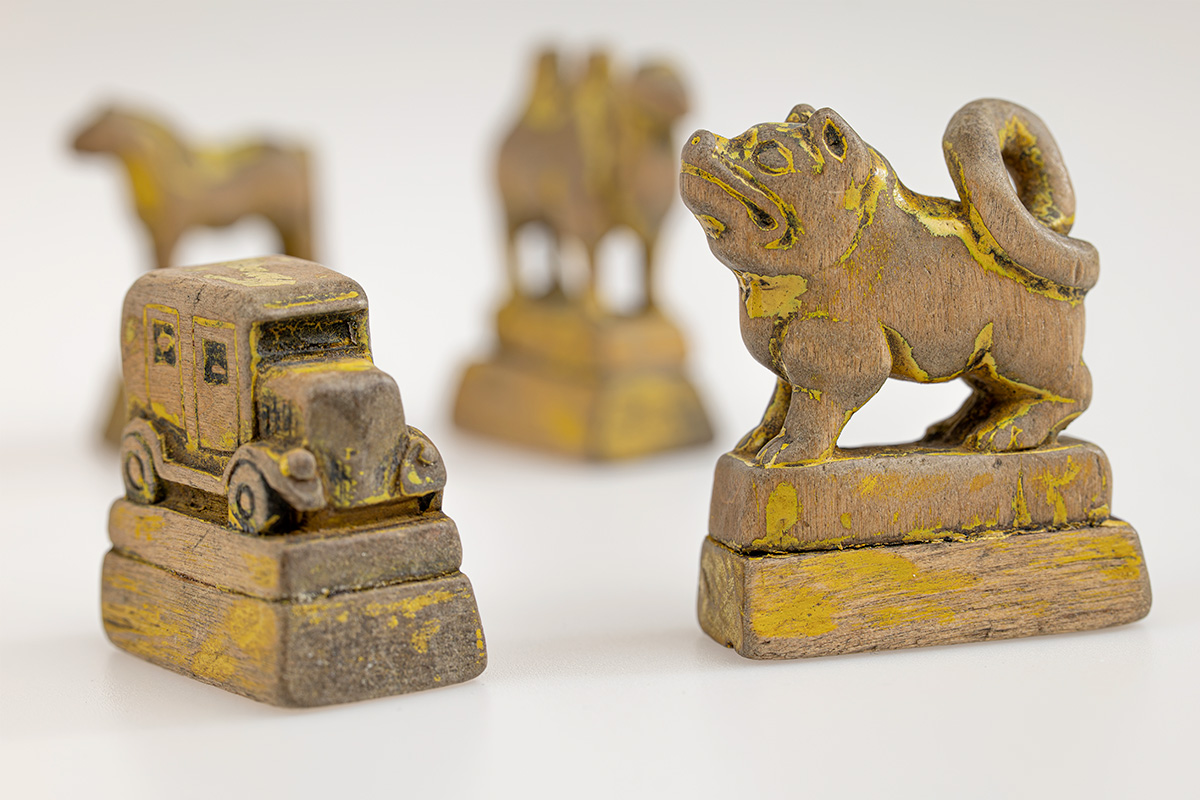
In this room, the East is told through the dialogue between aesthetics and philosophy: each set becomes a microcosm reflecting values, myths, and rituals of the societies that created it. In Southeast Asia, in particular, chess intertwines with popular traditions and ancient legends, taking on unique forms and rules that speak of identity and belonging.
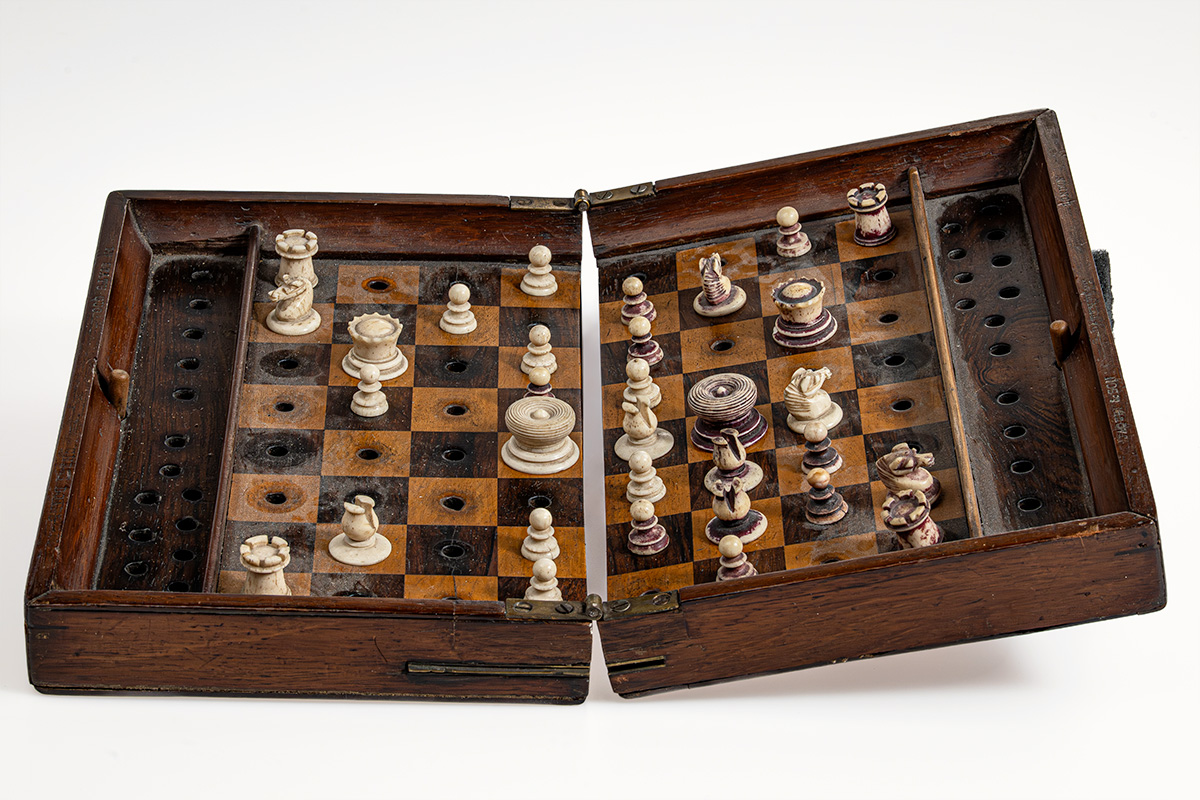
A thematic area is dedicated to war and memory, where chess sets handmade by soldiers using improvised materials such as lead, cardboard, or reclaimed wood found in trenches or prison camps tell stories of resistance, ingenuity, and the desire for clarity even in the most dramatic moments.
The room also explores the role of the game as a political and cultural tool: during 20th-century regimes such as the Nazi and Soviet, chess was transformed into a means of propaganda, national pride, and ideological assertion, demonstrating its symbolic power.
Donors’ Space
Finally, the Donors’ Space welcomes works and chessboards from private collections, creating a continuous dialogue between past and present. Each donation enriches the shared history of the museum and becomes part of an ever-evolving collective story. Those who own a special or memory-filled set are warmly invited to contribute: every chessboard can tell a fragment of culture.