Natalya Danko
Tbilisi, Georgia 1892 – Irbit, Russia 1942

Russian sculptor and ceramic artist. After studying at the Stroganov School and the City Art School, she worked in several sculptors’ studios before joining the Imperial Porcelain Factory in 1914. She created more than 300 figures and compositions, including thematic, satirical, portrait, and decorative sculptures, using bronze, terracotta, and wax. Some of her sculptures celebrate the Russian Revolution.
She is especially known for her series of workers in polychrome porcelain, such as the sailor, the policewoman, and new figures of the revolutionary people: the female worker delivering a speech, the woman with a sheaf of wheat, and the woman embroidering a banner. She was among the first Soviet sculptors to use porcelain bas-reliefs in architecture. Noteworthy are her ceiling decorations for several Moscow Metro stations.
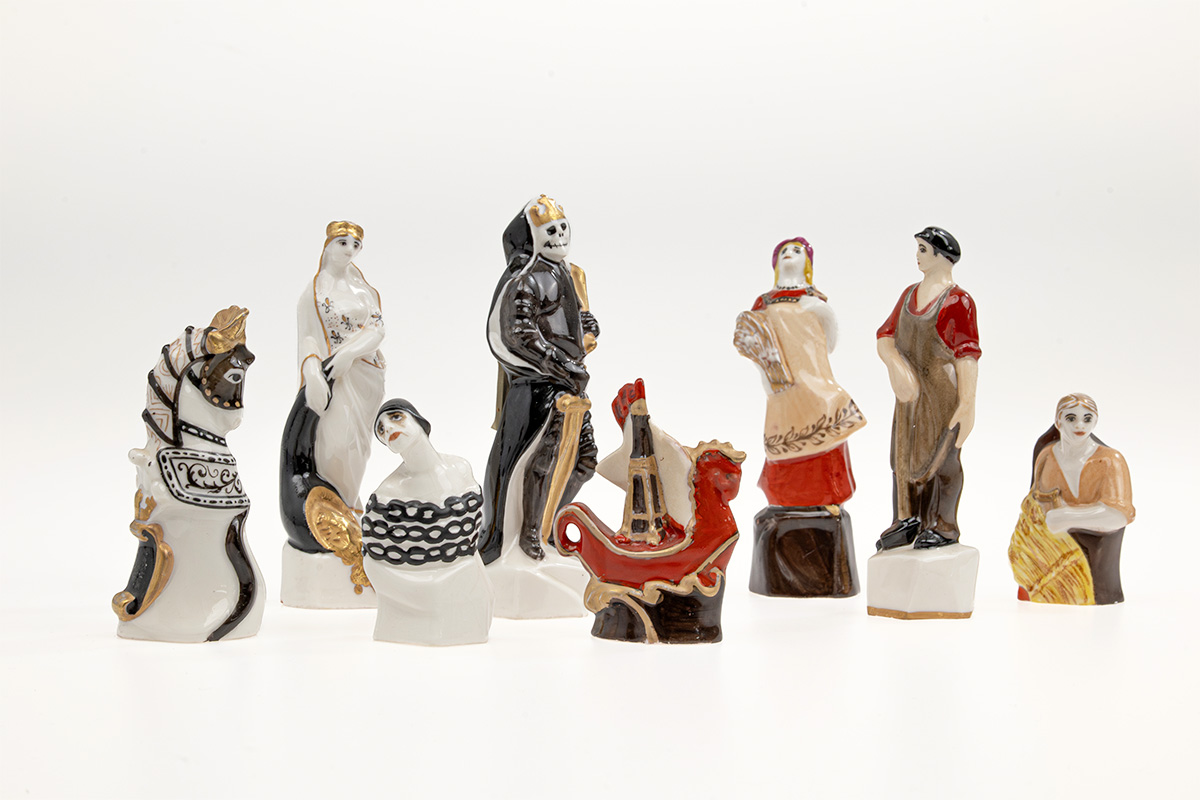
Around 1922 she created the famous Red and White chess set, a rare porcelain set that promotes Soviet ideology in keeping with the Russian chess tradition: the red pieces represent the Communists, while the white pieces represent Tsarist Russians.
Works on display:
- Communists vs. Capitalists, chess set, porcelain, 1923